


Your external R&D team
for the construction industry.
We work alongside manufacturers, material producers, and contractors
bringing specialist R&D capabilities in new product development,
sustainability compliance, and EU funding access.
Goal
Levery supports players in the Construction Sector
in developing cutting-edge projects with high sustainable impact.
Based on the Open Innovation approach and Applied Research methodology, Levery aims to accelerate the environmental, social, and economic impact of research for shaping a sustainable built environment.
Our Services for Construction Industry
Your journey for your innovation project starts here
NEW PRODUCTS
STUDIO
- R&D Project management
- Product design (eg., DfADRR)
- Research to market
- Market analysis
- Business Model definition
- Pre-commercial validation
- Testing activities
- Communication
SUSTAINABLE
PRACTICES
- Sustainable roadmap
- Decarbonization strategy
- Circular Business Model
- Digital Product Passport
- LCA, s-LCA, LCC, LCI
- ESG - Scope 1, 2, 3
- SRI
EUROPEAN
NETWORKING
- Scouting EU funding opportunities
- Writing funded project proposal
- Open Innovation
- Startups scouting
- Project monitoring and reporting
- Financial management
Recent Insights
Discover all articles in the insight section
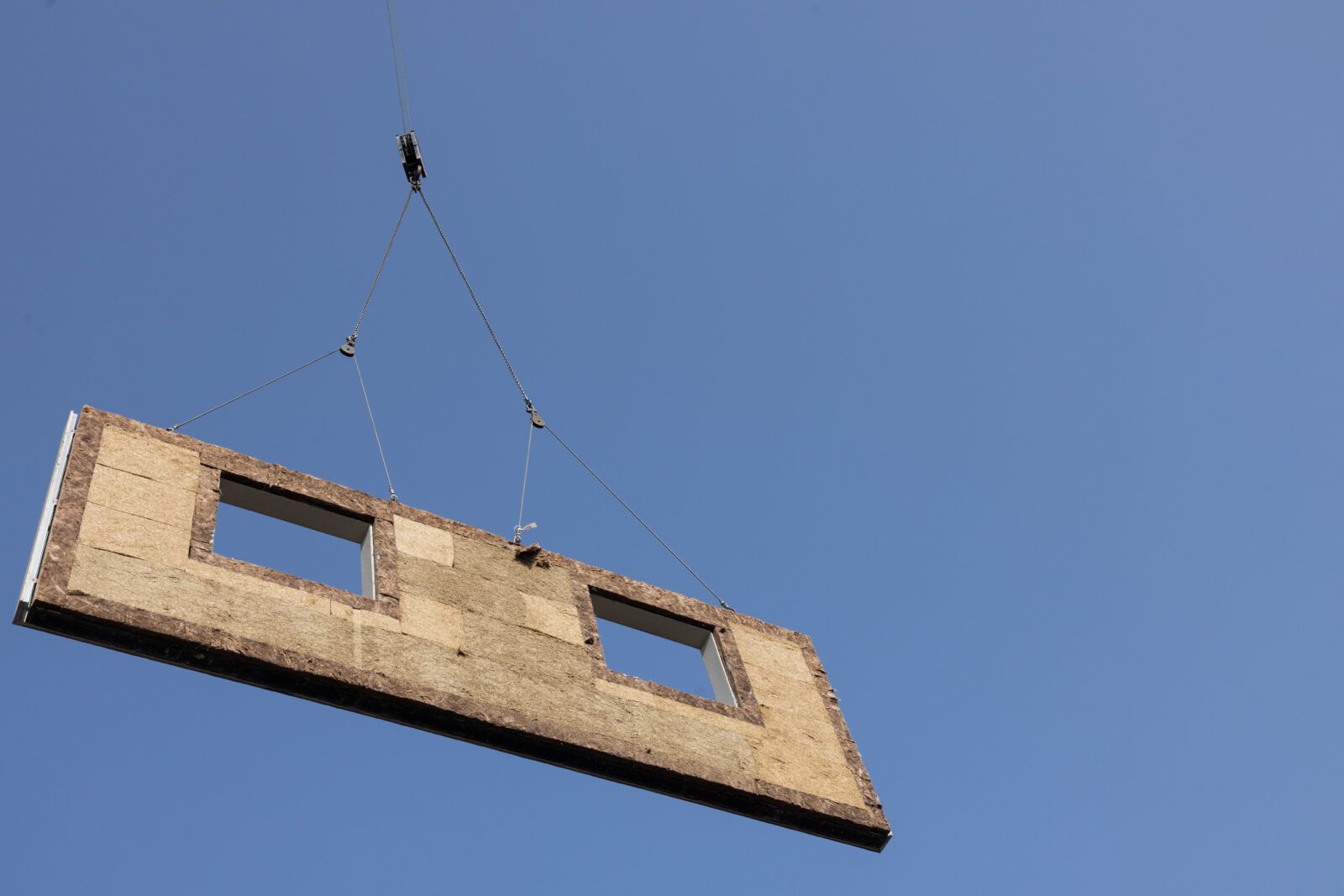
Make It Green Bio-based Projects Series: Make It Green Bio-03 Article 04/26 Introduction The biological transition in the construction sector finds its ultimate validation in the implementation of architectural projects that integrate low-environmental-impact materials. Following our analysis of bio-based stakeholders and products, this article examines six projects completed between 2023 and 2026. These interventions demonstrate how the use of biocomposites, natural fibers, and "grown" construction systems achieves equivalent or superior technical performance compared to traditional building methods, while ensuring the decarbonization of the built heritage at both national and European levels. The adoption of bio-based solutions is no longer a niche experimentation but a consolidated reality ranging from monumental restoration to large-scale urban developments. The goal of this analysis is to highlight the competitive advantage of such materials in terms of thermal phase shift, moisture management, and biogenic CO2 sequestration. Iconic Projects and Urban Innovation in Europe The integration of bio-based materials at an urban scale found a fundamental example in Germany, in the Roots Hamburg project, built with Rubner timber technology, has redefined the limits of timber construction, reaching heights previously reserved for concrete and steel. The use of mass timber (CLT and glulam) for this skyscraper allowed for a 30% reduction in CO2 emissions compared to an equivalent building. The structural lightness of timber proved to be a decisive technical advantage for construction in coastal areas. In Paris, public housing is successfully experimenting with hempcrete. The Goutte d’Or project by Atelier Fuso demonstrates how to integrate a timber frame with hempcrete infill in a dense and historical urban context. This combination ensures excellent thermal and acoustic insulation along with natural moisture regulation. Similarly, the work of Dalin Bourgoin Architecte on bio-based residential projects confirms the effectiveness of using cast-in-place natural materials, drastically reducing the structural carbon footprint compared to traditional masonry systems.

Make It Digital AI Series: Make It Digital AI-02 Article 03/26 AI-based solutions for the construction sector: from automated MEP design to high-precision reality capture The landscape of AI- based solutions is expanding rapidly, ranging from automated Mechanical, Electrical, and Plumbing (MEP) design to high-precision reality capture. The digital transformation of the construction industry is currently transitioning from static Building Information Modeling (BIM) toward an integrated "Cognitive Construction" ecosystem. While 2025 recorded a benchmark $6.57 billion in construction technology investments, the strategic focus has shifted: 64% of this capital is now allocated to productivity-enhancing tools, specifically AI and automation. Building upon our previous analysis of digital twin foundations, we now examine frontier products—from generative MEP engineering to multi-agent design support—that are addressing the industry’s most persistent labor shortages and efficiency bottlenecks . The evolution of generative design and BIM optimization The design phase represents the critical leverage point for both carbon and cost reduction, where AI-driven generative design is redefining architectural and engineering boundaries. A significant advancement in this field is represented by Clev.ai, an AI-based solution specifically designed to streamline the BIM authoring process. By automating repetitive modeling tasks and facilitating data-driven decision-making within the BIM environment, Clev.ai enables designers to reduce technical overhead and focus on architectural quality, ensuring that complex information models remain consistent and optimized throughout the project lifecycle. In the field of structural optimization, Autodesk Forma has deployed a cloud-based AI platform that enables real-time environmental analysis. By processing complex datasets—including wind patterns, solar radiation, and acoustic levels—the system allows designers to evaluate thousands of iterations in seconds. This ensures that a building’s massing and orientation are optimized for passive energy performance long before groundbreaking. Structural efficiency is further enhanced by computational pioneers such as Hyperganic. Their AI-driven algorithmic engineering enables the creation of complex, 3D-printable structural components that mimic trabecular biological structures. These elements are engineered through "functional gradients," where material density is strategically allocated only where mechanical stress requires it. This produces high-performance components that utilize up to 40% less material than traditional concrete or steel casting.
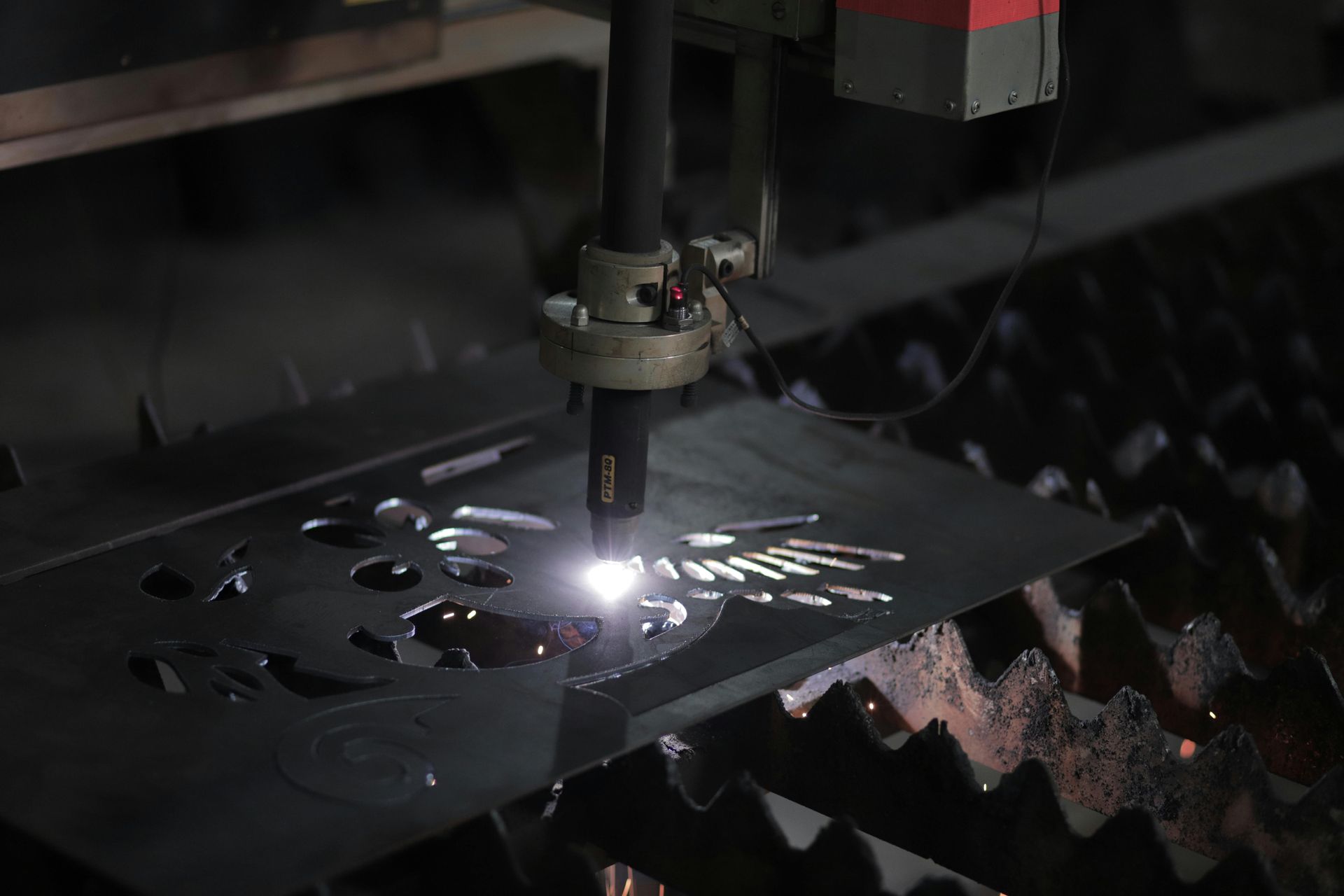
Make It Digital Robot&Automation Series: Make It Digital Rob-02 Article 02/26 Robotic & Automation for Construction: Robotic Products for Digital Workflows The systemic change toward a digitally integrated construction site could be enhanced on the physical deployment of robotic units capable of bridging the gap between digital representation of built environment via CAD and BIM, and jobsite execution. Following our analysis of the stakeholders driving this evolution, we now focus on some of the robotic products which are currently optimizing tasks automation and addressing human augmentation tasks deployment. These technologies address core industry challenges: labor shortages, safety risks in repetitive tasks, and the persistent productivity gap. By classifying these solutions based on their field of application, ranging from general building operations to specialized infrastructure works, we can observe how automation is replacing manual, error-prone processes with high-precision digital execution. The perspective is to transition from traditional manual labor to a proactive, data-driven construction environment. Automated construction operations and site execution Building on-site operations: layout and structural masonry The initial phase of any on-site operation requires the precise translation of digital designs into physical coordinates. The HP SitePrint layout robot serves this specific function, autonomously printing complex floor plans directly onto the jobsite slab. By integrating directly with cloud-based BIM data, the system eliminates the traditional, manual marking process. Its impact is measured by the reduction in layout time and the high-fidelity alignment between the "as-designed" and "as-built" setting out, preventing downstream errors. Moving from layout to structural assembly, the FBR Hadrian X represents a significant shift in autonomous masonry . This truck-mounted system utilizes a telescopic boom to lay structural blocks according to a 3D CAD model. By using a specialized adhesive instead of traditional mortar, the Hadrian X achieves high lay rates and structural precision with minimal material waste. This application is highly effective for residential and commercial building shells where speed and consistency are primary drivers for schedule optimization.
